I’m teaching stained glass classes in 2026!

My stained glass business has really taken off this year! From taking commissions and fixing repairs, to attending my first holiday market, there seems to be endless possibilities for bringing my art into the world.

I have been wanting to teach stained glass classes for a while now. It is so exciting to hit the ground running in 2026!

Here are my winter offerings:

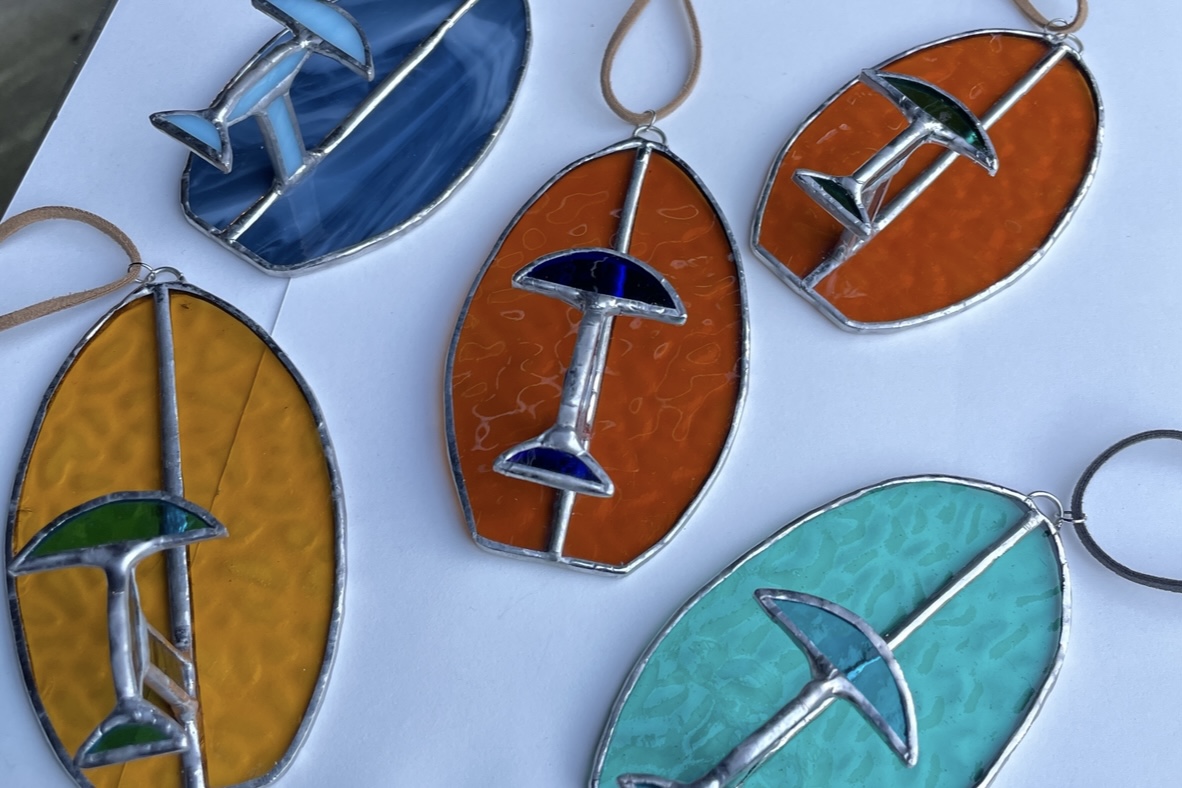
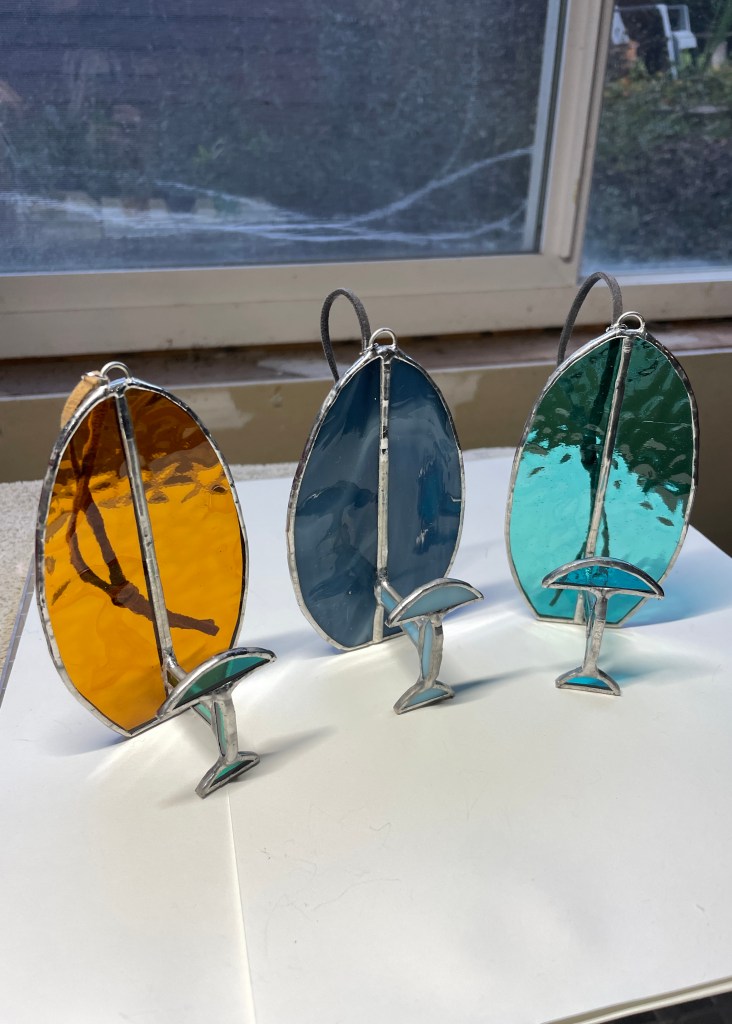
  • Stained Glass Foil Boards at the Gorge MakerSpace — In January, I’m teaching a stained glass crash course for the wind sport folks. Students will customize their own 3D foil boards!
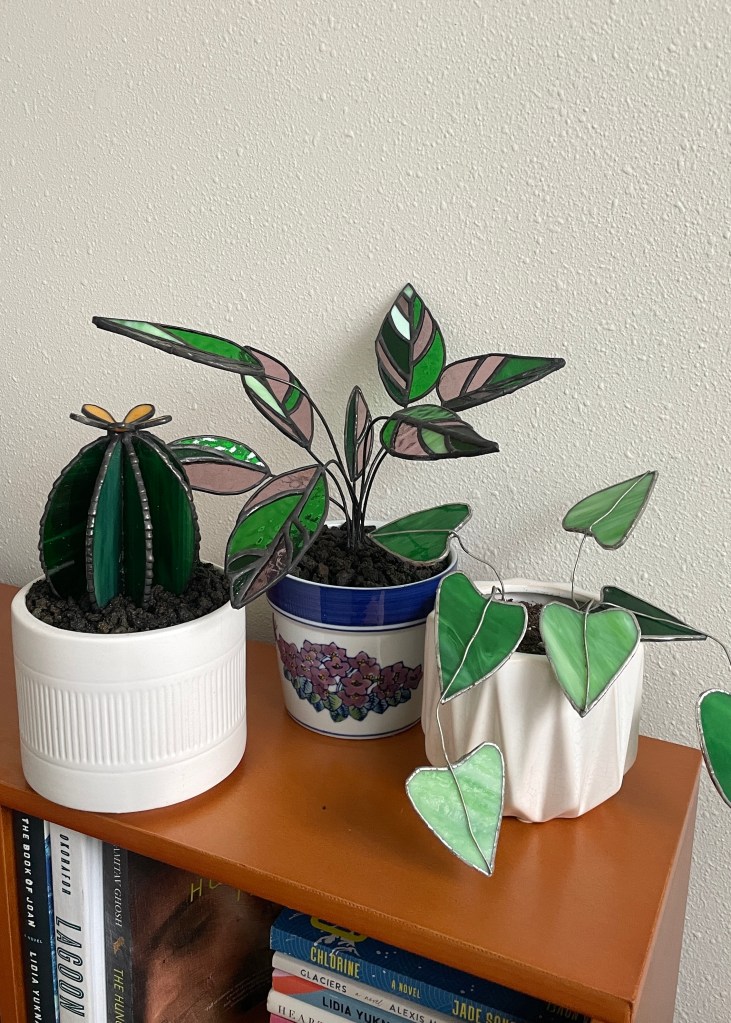
  • Stained Glass Plants at the Gorge MakerSpace — I’m teaching two classes in February where students will make their own forever plants! Students can bring their own planter or vessel to customize the experience even more.
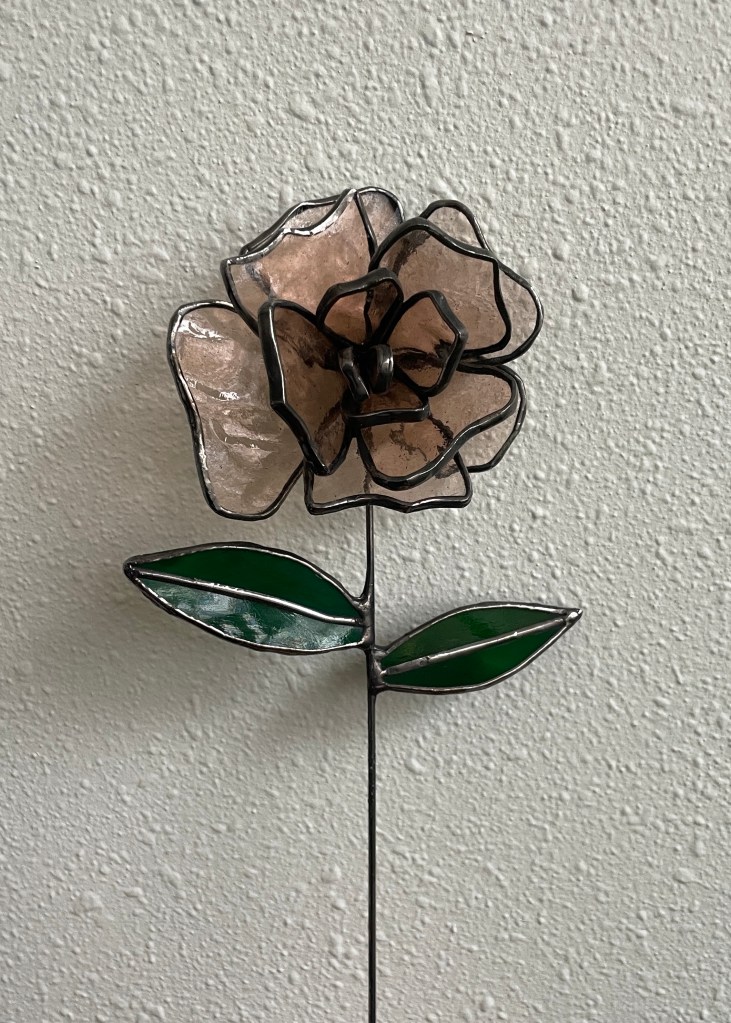
  • Stained Glass Roses at For Good and Mad — On Valentine’s Day, I am teaching students how to create unique stained glass roses. This is a perfect class for date night! Students can work together on a bouquet or independently on their own creation.

I am really looking forward to these classes and sharing the art of stained glass with my community. I can’t wait to help students become empowered by their new ability to cut and solder glass into something beautiful and handmade.

Check out my Classes page to sign up!

My stained glass piece for Machi Yoga is officially up!

When I approached Ale at Machi Yoga in the Hood River Heights about a custom stained glass piece in her studio, I was not expecting such excitement and enthusiasm. She knew exactly where it would go: in the center top window. I was intimidated at first. What did I sign myself up for?! I have never completed a project this big before! But I was so thrilled she said yes.

When imagining what the piece would look like, I reflected on the principles of yoga and the aesthetic of the studio. I wanted to incorporate elements of nature as a way to embody the sensation of inner peace that manifests from the yoga practice.

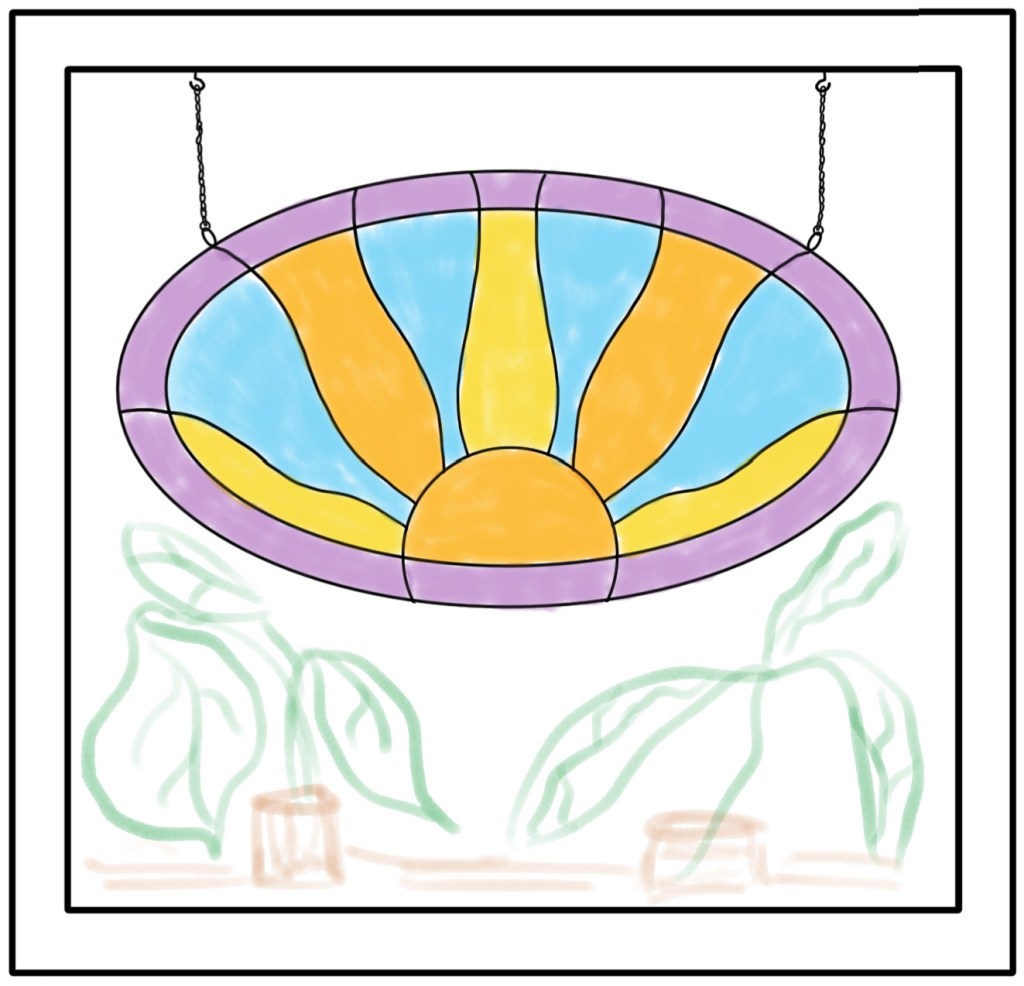
My digital design for the project

The oval shape of the piece was intentional. It provides a disruption to the squareness of the windows, while also fitting in nicely with the plants. I also felt that the oval shape would draw the eyes of not only those coming to the studio to practice, but those walking and driving by. Thinking about the piece being viewed from both the inside and the outside of the studio was important to me.

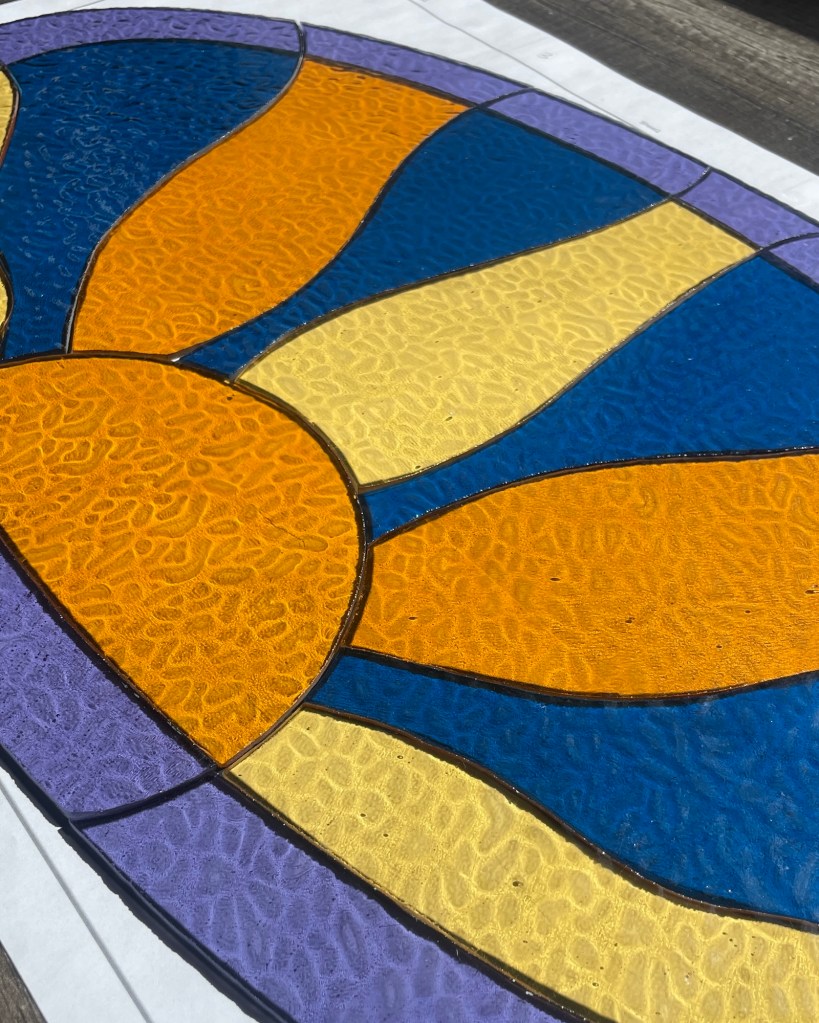
I chose Wissmach transparent English Muffle glass for this project. The transparency allows the light to come through the piece and the bumpy texture adds a dimensionality that can be appreciated in many different lightings.

An up close view of the piece before soldering

This project presented many opportunities for me to try new things. For starters, the project is 2 feet wide, which makes it my largest project to date! I also used lead came for the first time, which adds a sturdy and finished look to the outside edge of the piece. I even had my first heat fracture, which required me to replace a cracked piece on the perimeter of the project.

The finished piece

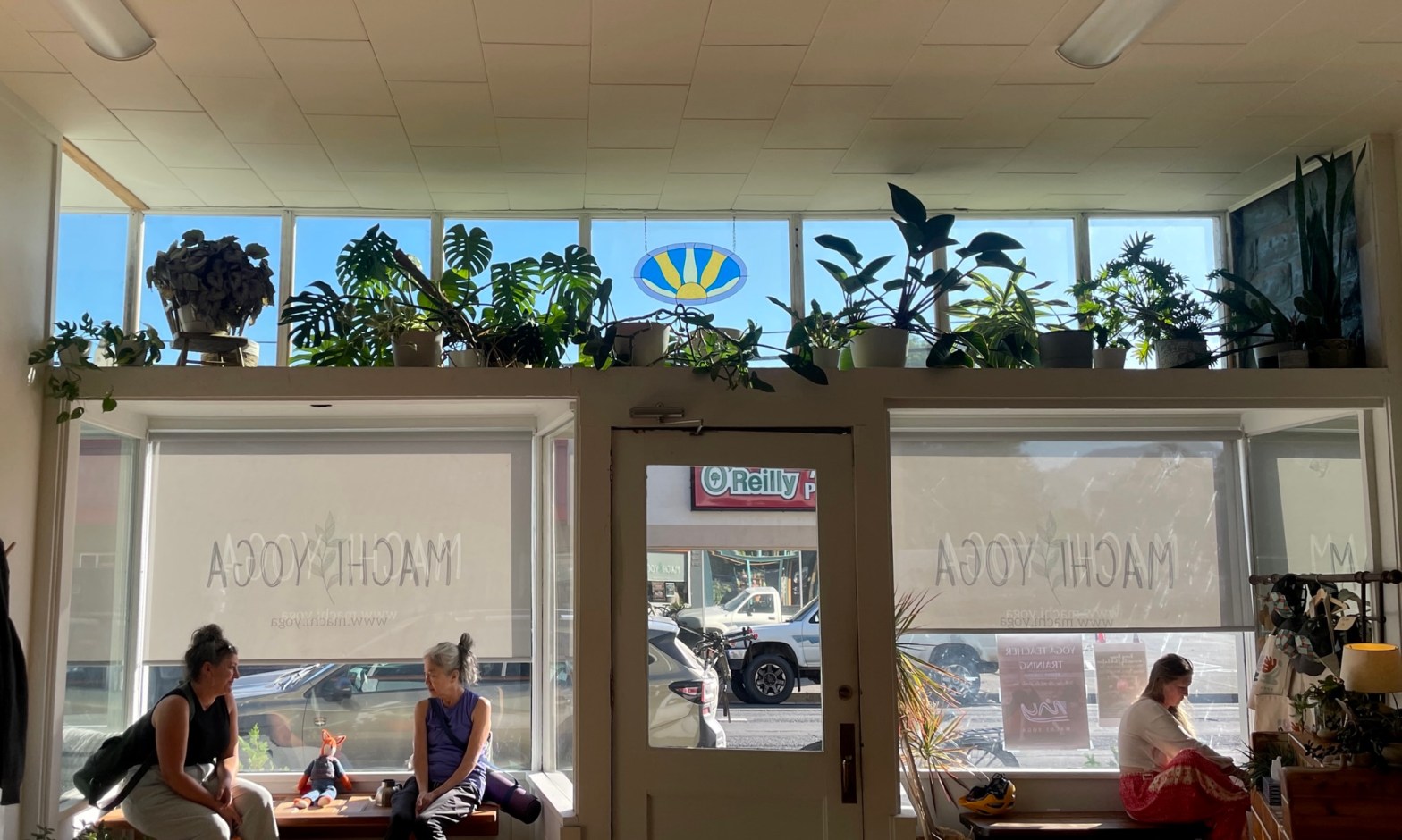
I worked really hard on this piece and it is so gratifying to see it up in the studio. The stained glass adds a vibrancy to the interior space and can definitely be appreciated from the outside of the studio as well. It fits so perfectly in the window amongst the plants—it’s like it was always meant to be there.

A view of the piece from outside of the studio during the day

It was such an honor to work on this project. I am deeply grateful that Ale believed in me and gave me this opportunity to try new things and take my art to the next level. It is so incredible to see my art out in the world and hear people’s positive reactions to the piece. It has made my yoga practice at Machi that much more special.

Come see the piece for yourself by taking a class at Machi Yoga in Hood River, OR!

A view of the piece from inside the studio during the evening

Trying wire work for the first time

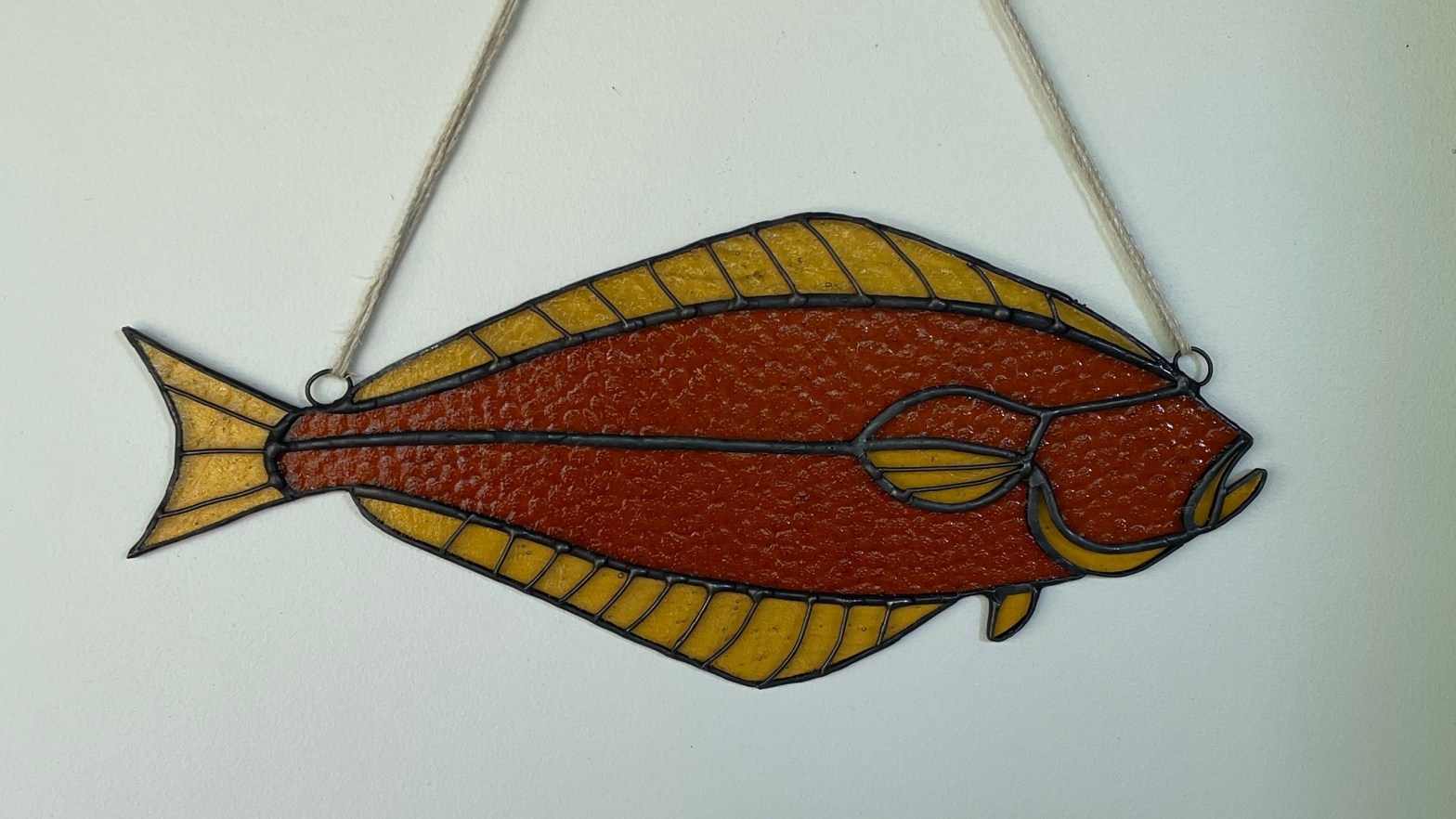
My friend Grace asked me to create a stained glass halibut for her partner’s birthday. I made a trout before, but this funky looking fish was a new one for me. Having never seen a halibut before (besides on my plate), I started researching the fish and was quickly shocked by how HUGE they can be! Over 8 feet long and 5 feet wide is pretty nuts.

While having two eyes on one side of your head is pretty silly, I was more drawn to the fins, especially the spines and rays. I wondered how I could incorporate these features into the stained glass piece. My first thought was that I would paint them on, but once it came to soldering the piece, I knew wire work was the way to go.

In stained glass art, pre-tinned copper wire is often used to make jump rings or add structural support. But it can also be used to add decorative elements, giving your piece more texture and dimension. Pre-tinned copper wire is great because you can apply patina to it.

I hadn’t attempted decorative wire work in my stained glass art because I am rather sloppy with wire. I bet that someone who has a background in jewelry making or another related craft would have an easier time manipulating wire. For me, this is new.

The halibut posed a prime opportunity to try wire work for the first time, since the stakes were low: the wire didn’t have to be manipulated all that much. No curves, spirals, or delicate designs.

One by one, I cut the pieces to fit, soldering each end onto the piece. The process was actually pretty easy, and I ended up really loving how it turned out. When I look at the piece now, I can’t imagine it without these added elements. The three-dimensionality of the wire adds a really awesome texture to the piece, closely resembling the spines and rays of the halibut. Mission accomplished!

I am definitely going to attempt more wire work in the future. Knowing how well it turned out, I am going to keep it in mind as I develop designs for future projects.

Recent stained glass tips and tricks

As I have been getting more comfortable with my stained glass equipment and basement “studio” setup, there have been some relatively simple things that have helped me complete projects more efficiently and with less emphasis on perfection.

Putting together a stained glass project is a multi-step process and different skills are needed to complete each step. So it takes a lot of practice to get it all down.

Lately, I have been working on several projects at once. At first thought, this seems like it would take longer (and maybe it technically is a longer process this way), but in practice, working on multiple projects at the same time allows me to linger on each step just a tad bit longer, making it worth setting up the grinder or getting situated to solder. And in the end, I have several projects completed! Regardless of the apparent increase in efficiency, working on many projects at the same time is very rewarding in the end.

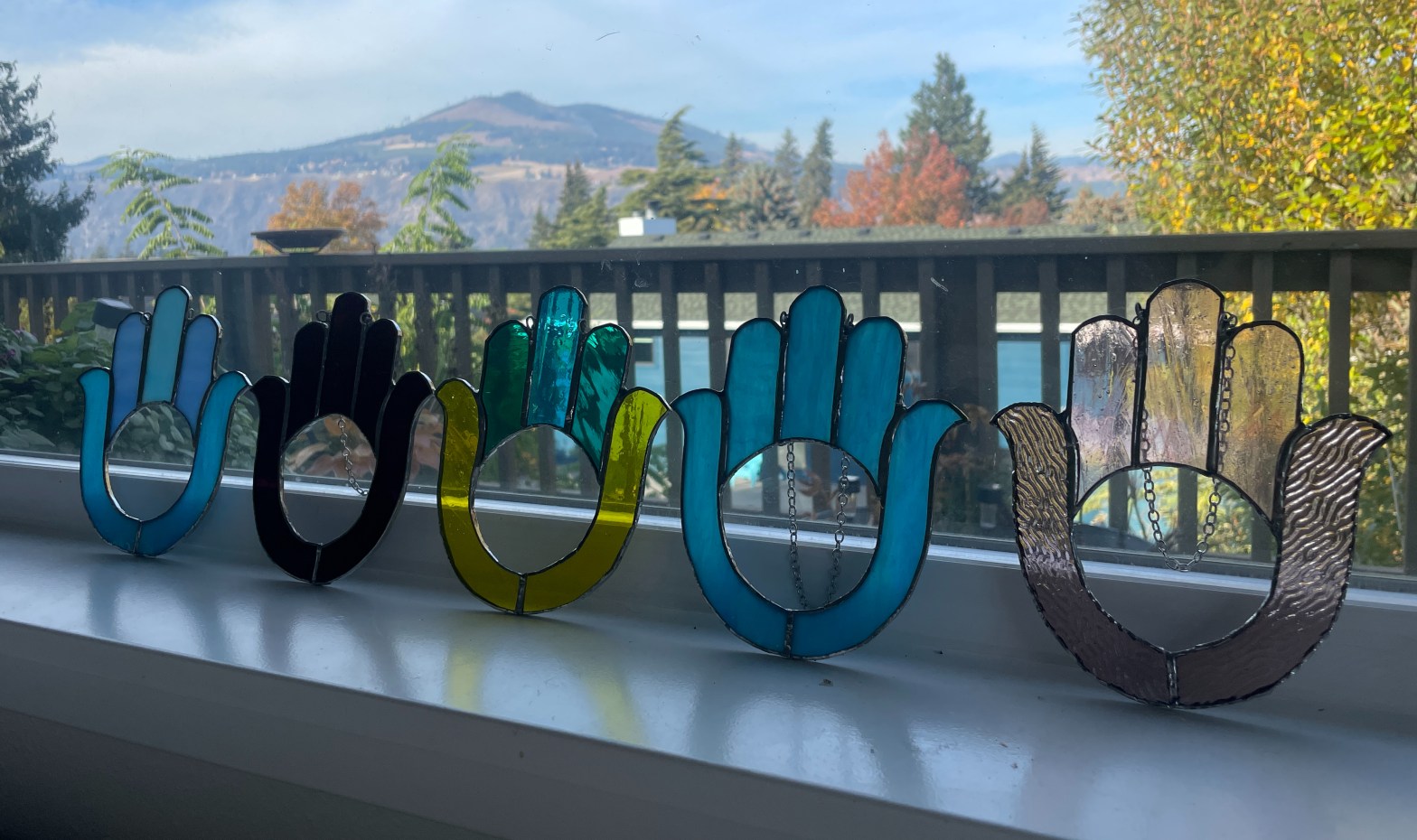
I also realized that I could make multiples of a single design. I recently made a hamsa design, inspired by a Pinterest post. The design is pretty simple: there are only 5 pieces and you can use practically any color and texture of glass (although I have avoided red for obvious reasons). I am not exactly sure what I am going to do with all these hamsas, but the iteration was a helpful process.

It’s easy to let perfectionism take over while making stained glass art. For example, you can get pretty obsessed with making sure all the pieces fit perfectly together before you move on from the cutting stage. You can certainly recut a piece a million times to get it just right (sometimes recutting is necessary!) but for me, I’m always balancing the need for practice and the goal of conserving glass.

I’ve been using two main tricks that help me stay on track:

The first tip is a technical one: Fill the gaps! If there is a gap between pieces that you’re concerned about, just fold up some copper foil and stuff it in there before you solder! That way there is something for the solder to latch onto, rather than crossing your fingers and hoping it’ll all look ok when you try to fill it in with solder. It seems so simple, but once I started doing this, I was able to avoid getting stuck at the cutting stage unnecessarily.

The second is a mental one: Come back later! I can get frustrated when I get stuck on different steps. When this happens, it’s time to put down the tools and walk away. When I revisit something with fresh eyes, I am always surprised by how quickly and easily the problem seems to resolve itself (this is not just about stained glass!).

As a beginner, picking up simple tricks here and there has made such a difference in the end result of my projects. I’m excited to see what other tips I pick up along the way!